Carlo Wolf · 18 September 2026
Thermal Variations Disrupt Orbital Beam Alignment in Experiments Spanning Multiple Global Research Sites
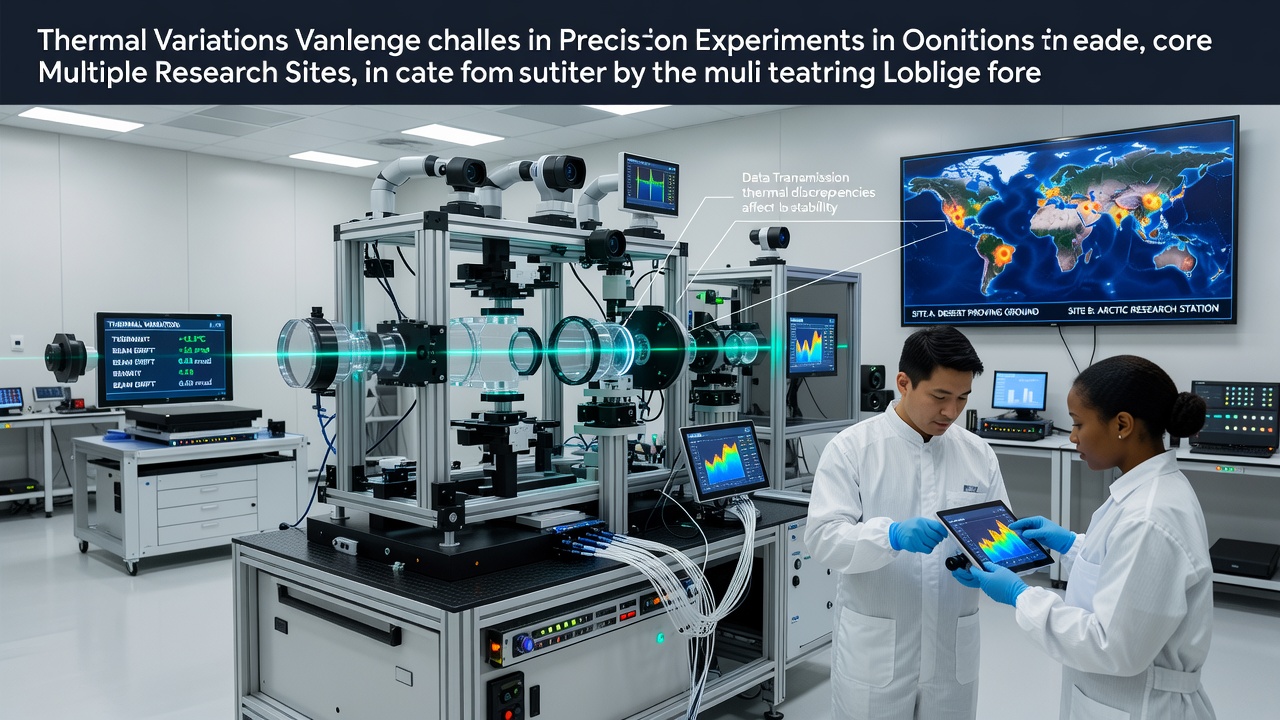
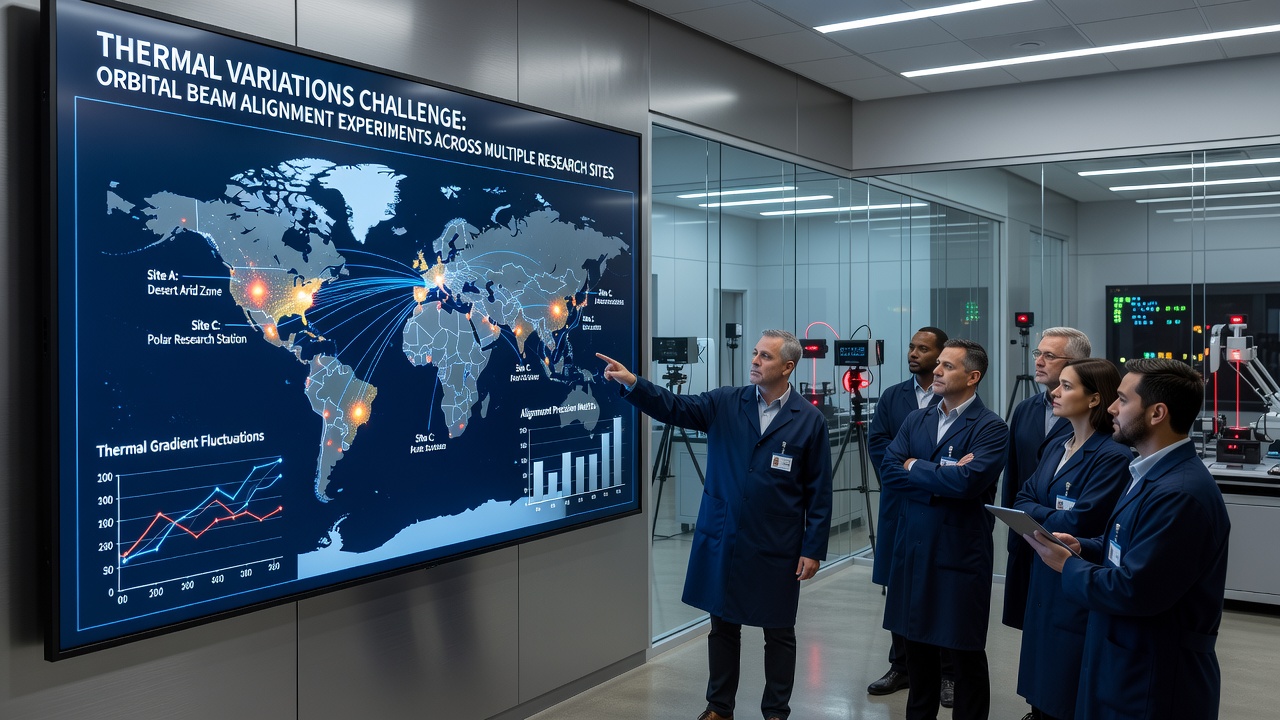
Thermal variations create significant hurdles for orbital beam alignment experiments conducted at research facilities around the world, and data collected through 2026 shows these temperature shifts affect precision across sites in North America, Europe, and Asia. Researchers track how daily and seasonal temperature swings alter beam paths in orbital setups, while equipment responds differently depending on local climate conditions and facility design.
Multiple sites report that even small changes in ambient temperature lead to measurable deviations in beam positioning, and these effects compound during extended observation periods. Facilities in arid regions experience rapid daytime heating followed by sharp nighttime cooling, whereas coastal locations deal with more gradual but persistent humidity-driven fluctuations that influence component stability.
Patterns Observed Across Research Networks
Studies compiled from international collaborations indicate that thermal expansion in support structures and optical mounts accounts for a large portion of alignment drift recorded during orbital passes. Engineers at several laboratories have documented how metal components expand and contract at rates that exceed initial design tolerances when exposed to temperature cycles exceeding 15 degrees Celsius within a single day.
In September 2026, synchronized measurements taken at facilities in the southwestern United States and northern Scandinavia revealed comparable drift patterns despite the sites being thousands of kilometers apart and operating under contrasting climate regimes. Teams noted that passive thermal shielding reduced but did not eliminate the problem, prompting ongoing work on active compensation systems that adjust alignment in real time.
Technical Factors Driving the Challenge
Orbital beam experiments rely on precise coordination between ground-based emitters and space-based receivers, and thermal variations introduce phase shifts that degrade signal quality over distance. Data from multiple campaigns show that temperature-induced refractive index changes in air columns above facilities further complicate ground-to-orbit links, especially during periods of high solar activity.
Researchers have implemented sensor arrays that log temperature at various points along beam paths, and these readings feed into predictive models that anticipate alignment corrections needed for upcoming passes. Facilities in Japan and Australia have shared datasets indicating that localized heating from nearby infrastructure can create micro-climate effects that amplify standard diurnal temperature swings.
Responses from Global Research Teams
Teams at various institutions have tested advanced materials with lower thermal expansion coefficients, and results indicate measurable improvements in maintaining beam stability during temperature transitions. Collaborative projects coordinated through agencies such as NASA have explored integrated cooling systems that maintain component temperatures within narrow ranges even when external conditions vary widely.
European research groups working with the European Space Agency have focused on software-based correction algorithms that use real-time thermal data to recalibrate beam paths automatically. These approaches complement hardware upgrades and have shown success in reducing downtime caused by alignment loss during orbital windows.
Data Sharing and Coordinated Monitoring
International data exchanges have accelerated understanding of how regional climate factors interact with experimental hardware, and participating sites now contribute standardized thermal and alignment logs to shared repositories. Analysts examining records from 2025 and 2026 note that sites at higher elevations experience more pronounced temperature swings that correlate with increased alignment adjustments during evening passes.
Facilities in Canada and South Africa have reported similar challenges, leading to joint development of modular thermal management kits that can be adapted to different geographic and climatic conditions. These kits combine insulation, active temperature control, and sensor feedback loops designed to keep critical components within operational limits throughout daily cycles.
Conclusion
Thermal variations continue to shape the operational parameters of orbital beam alignment experiments at research sites worldwide, and coordinated efforts among laboratories have produced both hardware and software solutions that address the core issues. Continued monitoring through late 2026 and beyond will provide additional datasets that refine predictive models and support further refinements in experimental design across the global network.