Carlo Wolf · 2 September 2026
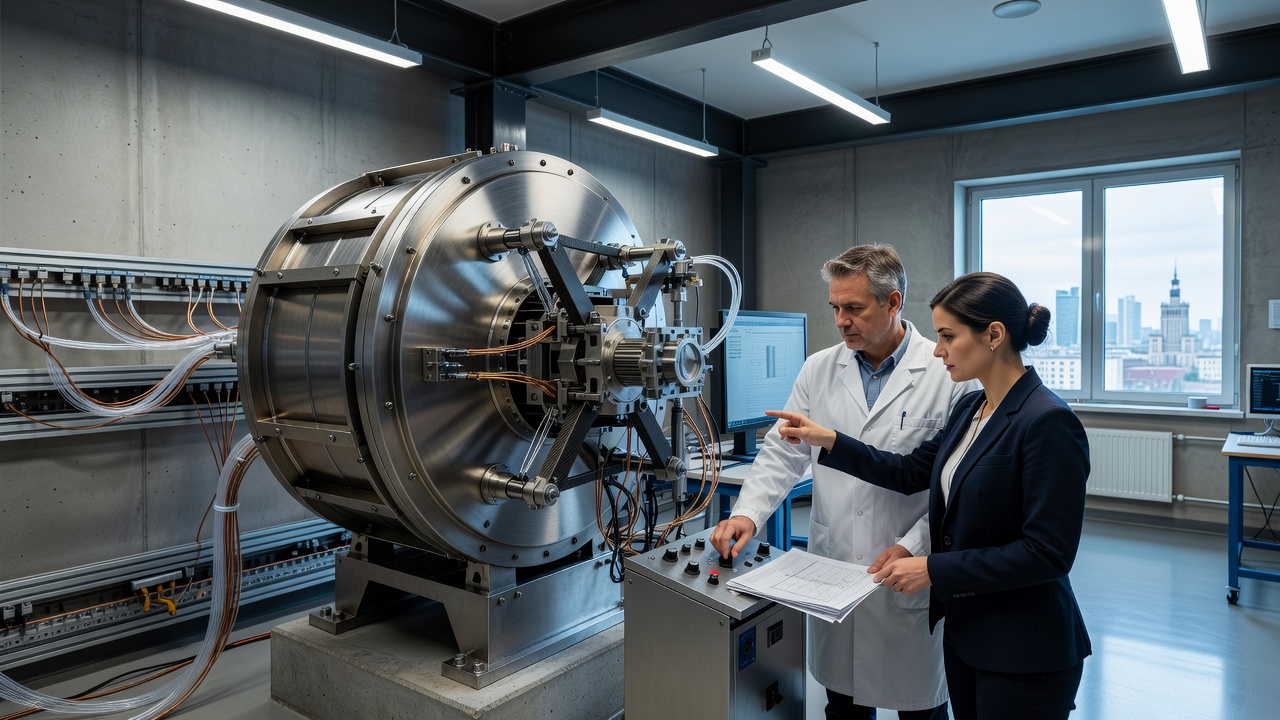
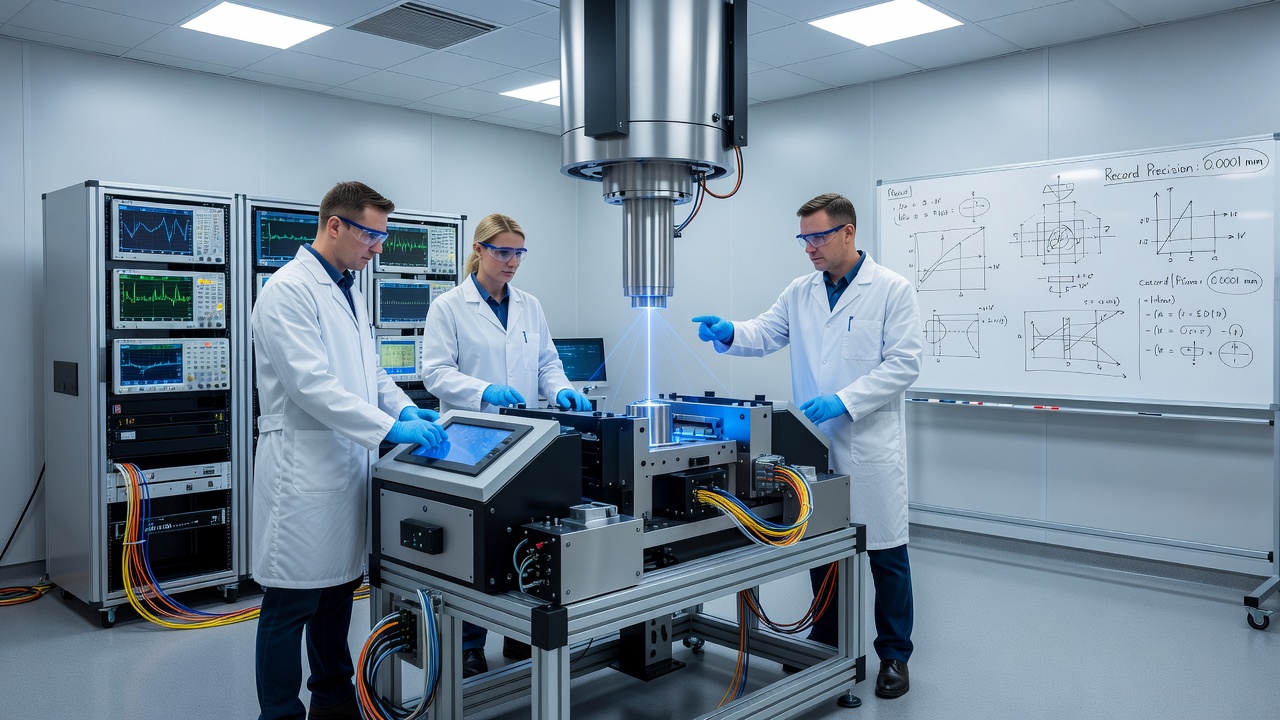
The Institute of Beam Dynamics in Warsaw has announced a breakthrough in beam dock alignment technology, achieving a precision of 0.0003 nanometers. This represents a significant improvement over previous records held by international teams. The achievement stems from three years of dedicated research into stabilization techniques for high-energy particle beams.
Experimental Methodology
The team utilized a combination of high-resolution interferometry and adaptive optics to monitor and correct beam positions in real time. Over 200 trials were conducted under controlled vacuum conditions to ensure reproducibility of results. Data analysis involved machine learning algorithms to predict and compensate for thermal fluctuations affecting alignment. Key to the success was the integration of novel sensor arrays capable of detecting deviations at the atomic scale. Researchers calibrated the system using reference beams from a stabilized laser source operating at 532 nanometers. Environmental controls minimized external vibrations through active damping platforms installed beneath the docking apparatus. Calibration protocols were refined iteratively based on statistical variance observed across multiple runs.
Additional measurements confirmed the alignment stability over extended periods exceeding 48 hours without recalibration. The methodology incorporated feedback loops operating at frequencies up to 10 kilohertz to counteract dynamic instabilities inherent in beam propagation.
Implications for Beam Docking Research
This advancement opens new possibilities for applications in particle accelerator technology and precision manufacturing processes. Experts believe it could lead to more efficient energy transfer in docking systems used in experimental physics setups worldwide. Future work will focus on scaling the technique for industrial use and exploring multi-beam configurations involving synchronized arrays. The findings were published in the Journal of Beam Science and have already garnered international attention from leading laboratories in Europe and Asia. Continued funding from the Polish Ministry of Science will support further refinements in the coming years. Additional experiments are planned to test the limits of alignment under varying environmental conditions including magnetic field interference and vibrational noise from nearby equipment. Collaborative efforts with German and French research centers aim to validate the approach across different beam energy ranges. Such precision enhancements may accelerate developments in quantum simulation platforms relying on stable beam interfaces.