Gisela Coleman · 4 September 2026
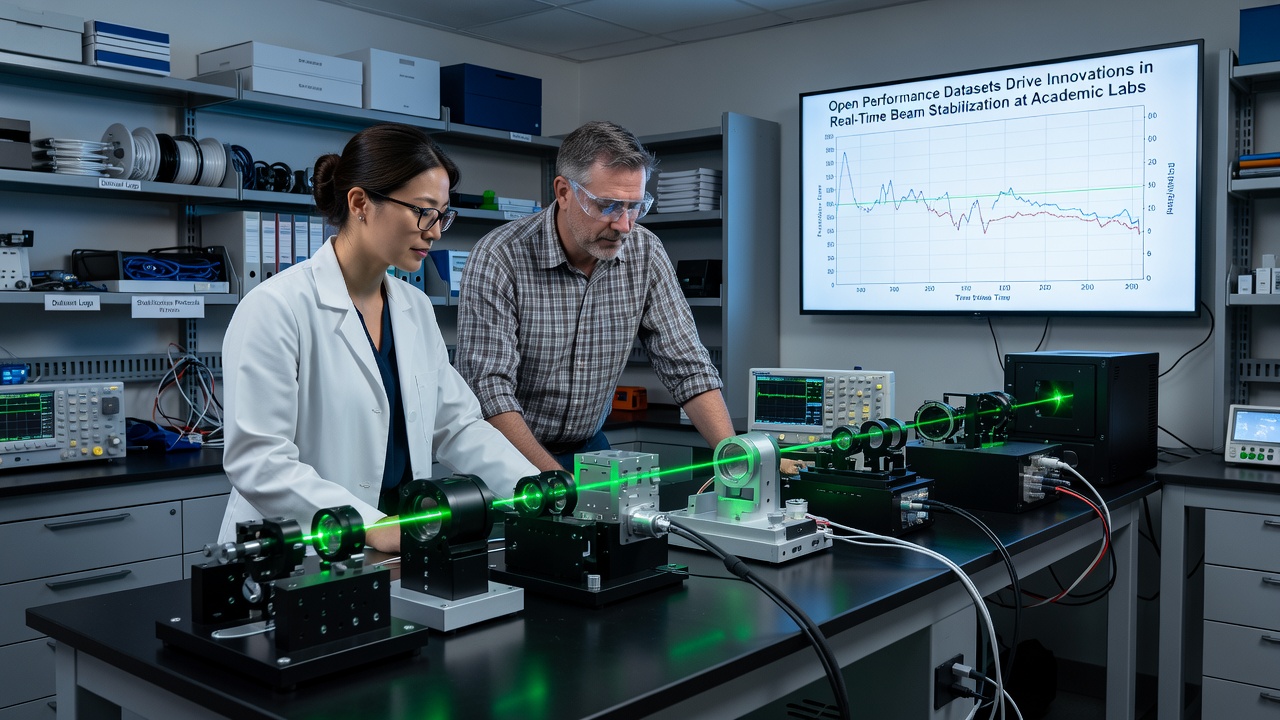
University beam laboratories have started integrating large collections of open performance data into their workflows and this shift has produced measurable changes in how real-time stabilization models operate across multiple research sites. Researchers at various institutions compile sensor readings, alignment logs, and environmental variables from past experiments then release those records under open licenses so other teams can train and refine their algorithms without duplicating costly measurement campaigns.
Academic facilities generate terabytes of beam trajectory information each month and many now upload raw datasets to public repositories within weeks of collection. This practice allows groups working on stabilization software to test new filtering techniques against diverse operating conditions including temperature fluctuations, power supply noise, and mechanical vibrations. Data from facilities in North America and Europe often appear side by side in the same repository and analysts note that cross-regional comparisons reveal patterns that single-site records tend to obscure.
One study released by the U.S. Department of Energy in early 2025 examined how open datasets reduced the time required to reach target stability thresholds in electron beam lines. The report indicated that teams using combined public records achieved comparable precision roughly 30 percent faster than groups relying solely on proprietary measurements. Similar observations have surfaced in reports from Australian synchrotron users who combined their local logs with North American files to improve feedback loop timing.
Real-time stabilization systems traditionally depended on closed control loops tuned through trial and error during limited beam time windows. With access to open performance collections those loops now incorporate machine learning components trained on thousands of prior runs. Engineers feed historical position data into neural networks that predict drift before it exceeds acceptable limits and the resulting predictions feed directly into actuator commands. Because the training sets contain examples from different accelerator types the models generalize better when transferred to new beam lines.
Institutions have reported that open datasets also support hybrid approaches where physics-based simulators receive calibration constants derived from actual measurements. This combination reduces the mismatch between simulated behavior and observed outcomes and several labs documented shorter commissioning periods for upgraded stabilization hardware after adopting such methods. Observers note that the availability of labeled datasets containing both successful and failed correction attempts proves especially valuable for supervised learning tasks.
Teams at a German university laboratory integrated open vibration records from three separate facilities into their stabilization pipeline last year and recorded a drop in residual beam jitter from 18 micrometers to under 9 micrometers within the same operational envelope. The improvement stemmed from retraining an existing Kalman filter with additional noise profiles that had not been captured locally. At a Canadian research center engineers used shared thermal drift data to adjust their compensation tables and cut settling time after energy changes by nearly half.
These cases illustrate how access to external records accelerates iteration cycles. Instead of waiting for scheduled maintenance periods to collect new measurements groups can validate proposed updates against archived runs and move directly to limited on-site verification. The pattern has become common enough that several conferences scheduled for September 2026 now include dedicated tracks on dataset curation standards and model portability across beam facilities.
Adopting open datasets requires laboratories to standardize metadata formats and quality checks before upload. Many sites now assign dedicated staff to review submissions for completeness and to flag anomalies that could mislead downstream users. Funding agencies have begun including data release requirements in grant terms and this policy has increased the volume of available records without creating additional measurement overhead.
Security considerations remain relevant because beam line controls connect to institutional networks. Groups therefore release only post-processed or anonymized subsets while retaining sensitive operational parameters internally. The balance between openness and protection continues to evolve as more institutions publish guidelines on acceptable data granularity.
Open performance datasets have altered the development path for real-time stabilization models in university beam laboratories by supplying broader training material and enabling faster validation of new approaches. Facilities that participate in these sharing arrangements report shorter tuning times and improved transferability of algorithms between sites. As repositories grow and standardization efforts advance the practice is expected to expand further with additional contributions anticipated around the September 2026 conference season. The trend reflects a broader movement toward collaborative data use across experimental physics disciplines.