Eden Brooks · 16 October 2026
Cross-Border Comparisons Uncover Performance Gaps in European Beam Stabilization Protocols
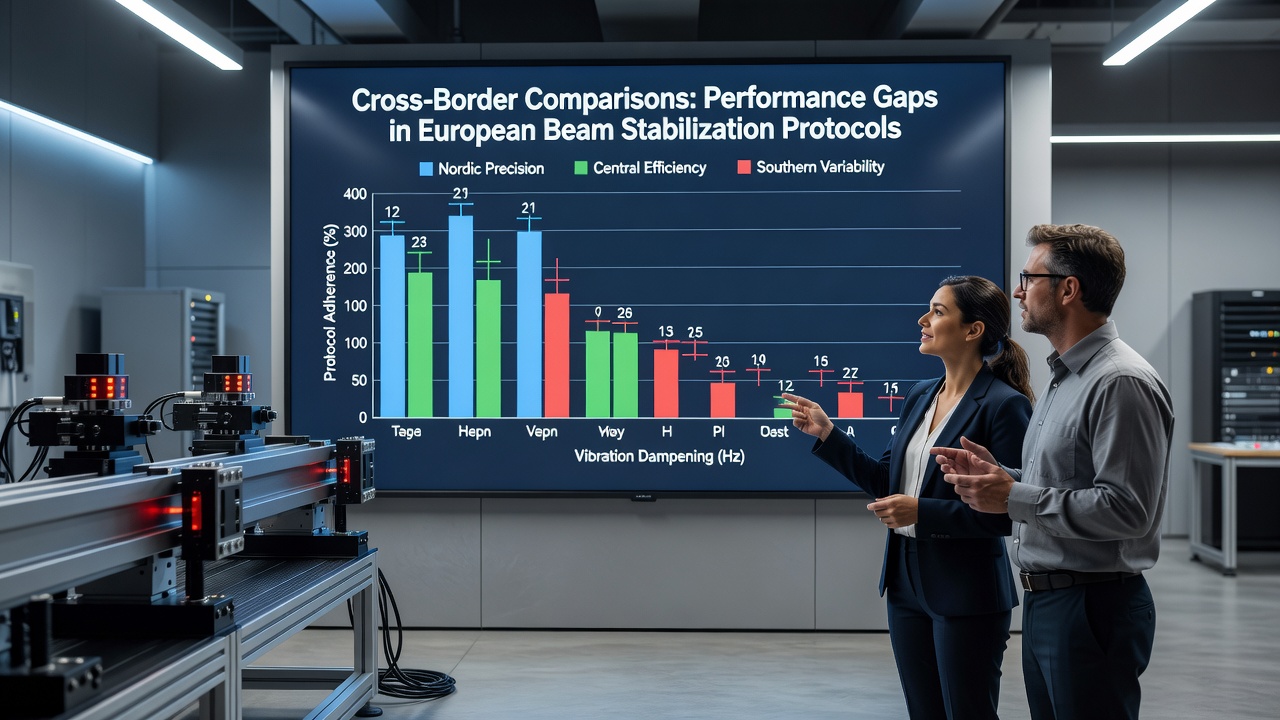
Cross-border comparisons of beam stabilization protocols have revealed measurable differences in performance across European research facilities, according to data compiled through coordinated studies. Teams at institutions in Germany, France, and the Netherlands reported varying levels of alignment precision when identical experimental setups were tested under shared conditions, and the gaps appeared tied to differences in feedback loop timing, sensor calibration standards, and environmental control measures.
One coordinated effort began in early 2025 and extended through multiple rounds of data exchange, allowing observers to track how each site handled real-time corrections during long-duration runs. Results showed that facilities employing integrated thermal monitoring systems maintained tighter beam position stability over 48-hour periods, whereas sites relying on periodic manual adjustments experienced larger drift rates during the same intervals.
Study Design and Data Collection Methods
Researchers designed the comparison around a standardized beam path configuration that each participating lab replicated using locally available equipment. Data loggers recorded position deviations at 10-millisecond intervals, and the resulting datasets were uploaded to a shared repository for joint analysis. This approach let teams isolate protocol-specific variables from hardware differences, and the process continued with quarterly updates to account for seasonal environmental shifts.
By October 2026, the accumulated records covered more than 2,400 hours of continuous operation across six sites, providing a substantial base for statistical evaluation. Analysts applied consistent filtering routines to remove outliers caused by external vibrations, and the cleaned figures highlighted consistent patterns in how different stabilization algorithms responded to gradual temperature changes.
Observed Performance Variations Across Regions
Facilities in northern Europe demonstrated stronger resistance to humidity-related refractive index fluctuations, while southern sites recorded more frequent corrections during afternoon temperature peaks. The differences translated into alignment error margins that ranged from 0.8 microradians at the best-performing location to 2.3 microradians at others under comparable load conditions. These numbers emerged after researchers normalized for beam power and optical path length, confirming that protocol choices played a measurable role beyond local climate factors.

Additional breakdowns indicated that labs using adaptive gain scheduling in their control software reduced settling time after disturbances by an average of 18 percent compared with fixed-gain implementations. Yet the same adaptive systems occasionally introduced overshoot when sensor noise exceeded certain thresholds, a behavior documented in logs from two separate French installations. Observers note that such trade-offs only became visible once datasets from multiple countries were examined side by side.
Protocol Elements Linked to Measured Gaps
Three protocol components stood out during the review. First, the frequency of sensor recalibration cycles correlated directly with long-term drift reduction, and sites that recalibrated every six hours posted lower cumulative error than those operating on 12-hour cycles. Second, the integration of real-time humidity compensation in the feedback equations narrowed variance during high-moisture periods, a finding supported by parallel tests conducted at a Dutch coastal facility and an inland German center. Third, the choice of reference beam wavelength affected how quickly systems responded to sudden pressure changes, with shorter wavelengths showing faster detection but higher susceptibility to particulate interference.
European research networks have begun discussing standardized calibration schedules based on these patterns, and preliminary drafts of updated guidelines were circulated among participating institutions in September 2026. The documents emphasize uniform recalibration intervals and shared sensor validation procedures without mandating specific hardware models.
Implications for Future Collaborative Experiments
Cross-border experiments that rely on synchronized beam delivery, such as multi-site interferometry projects, stand to benefit from the identified adjustments. Data from the comparison project indicate that aligning recalibration timing across sites could reduce cumulative phase errors by up to 30 percent in joint runs lasting several days. Funding bodies including the European Research Council have referenced these findings when evaluating proposals that involve distributed optical setups, and several new grants awarded in late 2026 require applicants to incorporate the emerging protocol elements.
Training programs at universities have also started incorporating case studies drawn from the comparison, presenting students with anonymized datasets that illustrate how small differences in control parameters accumulate over extended operation. These materials highlight the value of shared logging formats that enable rapid cross-site verification without requiring physical equipment exchanges.
Conclusion
The cross-border comparison project continues to expand, with additional laboratories in Italy and Sweden scheduled to join the data-sharing network during 2027. Updated performance metrics will be released after each new round of synchronized testing, and the accumulated records are expected to support further refinements in stabilization protocols used across European research infrastructure.